
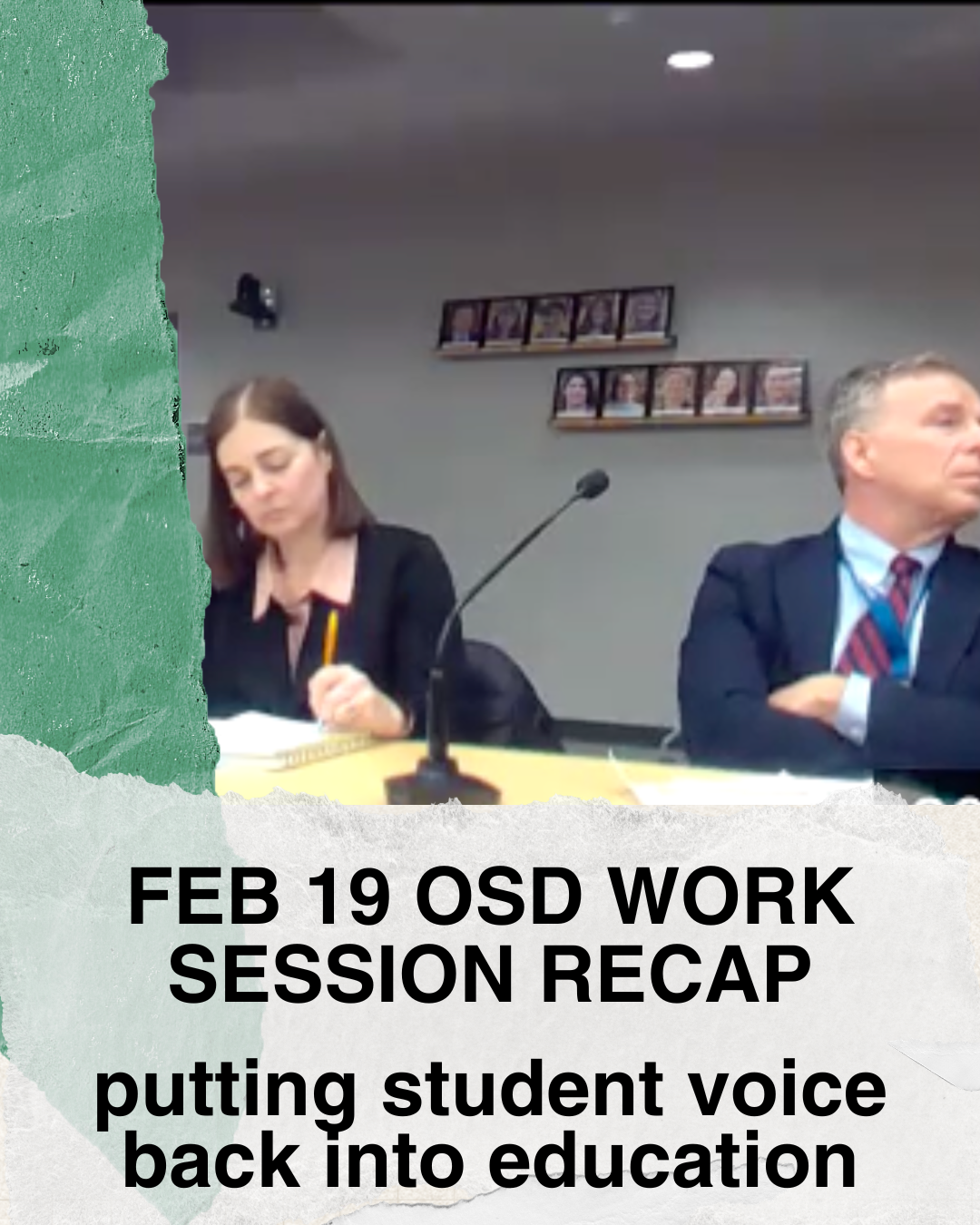

On February 19, the Olympia School District board of directors met with the principals of all the schools on our Eastside of town to discuss their School Improvement Plans (SIP).
Strategies involving fostering a sense of belonging in students were the main focus. Jen Brotherton, principal at Boston Harbor Elementary said, “The reason I believe our strategies are working, for one, 75% of students said they felt a sense of belonging at Boston Harbor on the Panorama survey this fall. Additionally, 92% of our students said they felt they had supportive relationships at school.”
Most recently, restorative justice training has begun districtwide. At Centennial Elementary School, Principal Shannon Ritter gave an example of students reporting sightings of a ‘Moss Man’ hiding in the trees and photographing students at recess.
“Even after reviewing video footage, talking with the students and staff, the sightings could not be confirmed, and the story grew and took on a life of its own,” said Ritter, “It was determined that a few students let their imagination get the best of them, and after talking with the teacher, we decided that a restorative circle, would happen the next morning during class.”
Students had become frightened of the moss man and were able to speak about the experience with students that embellished the story, “It was a powerful example of how students, were given time to address what had happened, and allowing them to express their feelings and share the impact that it had on them in a way that was meaningful and honored their voices.”
Student voices were a huge part of many presentations, and Vice President Maria Flores took notice, “Madison, Avanti, many of you have talked about the importance of student-led and collective decision-making and putting student voice back into education.”
Domenico Spatola-Knoll, principal at Madison Elementary School, said, “Promoting a sense of belonging through student-led meetings and collective decision-making helps give students a voice and a sense of shared ownership.”
Director Renee Fullerton addressed the use of technology in schools, and Reeves Middle School Principal Karen Zarate mentioned, “Technology is great, but at the expense of having it in front of the students all day long, it’s not great. And so, this year, I asked Marc Elliott [district Chief Informations Officer] if there was any way that we could come up with some devices to, house the Chromebooks as the students come into each class period.” Zarate summed it up with “I’d like to go back to some textbooks and paper and pencil.”
And while schools saw gains in student-led initiatives, Vice President Flores also asked about the Washington Student Improvement Framework (WSIF) that tracks growth and informs much of these plans. Pioneer Elementary School Principal, Joel Lang, had some criticism. “There’s such a delay in it that even though our goal is really focused about that, we may not see the benefit of that for 2 years’ time. Yeah. And then by then, can we attribute it directly to that goal? Maybe. We hope so, but maybe not.”
He continued, “It’s a better measure than just strict achievement, because growth is a really important factor of a student’s experience in a classroom and in a school over time. But I just wish it was more, timely and responsive to, like, the minutiae of what we’re trying to do to move the needle.”